 Reviews

 Proudly American

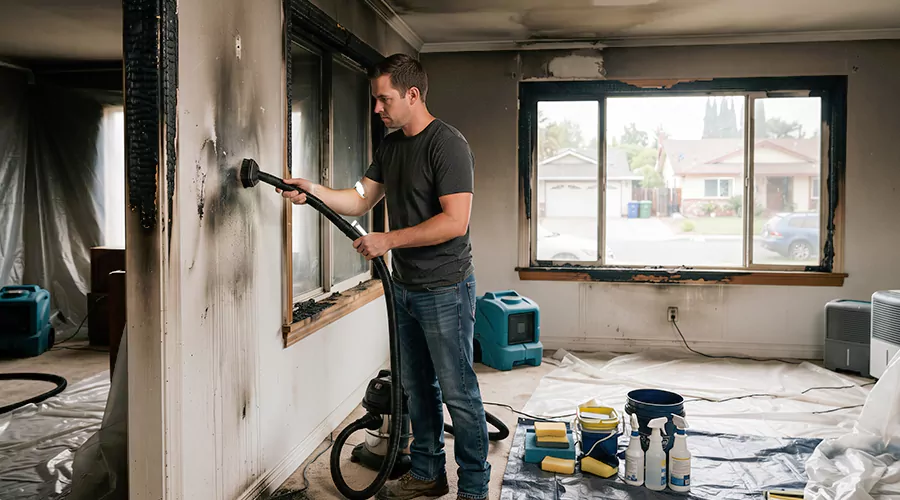
Soot cleanup after a fire should begin with dry removal before any wet cleaning starts. Loose particles should be vacuumed with suitable filtration or lifted with a dry cleaning sponge. Washing soot too early can smear oily residue into paint and make staining harder to remove during fire and water clean up.
Soot can travel well beyond the burned area. Walls or ceilings in nearby rooms may collect residue even when flames never reached them. Cleaning should therefore start with an inspection of the full affected area.
What Should You Do Before Cleaning Soot?
Before cleaning soot, confirm that the property is safe to enter and identify areas affected by fire or firefighting water. Avoid touching walls with bare hands because soot can smear easily. Photograph visible damage before moving or cleaning items that may be part of an insurance claim.
Start with these steps:
- Wait until the property is cleared for entry.
- Photograph visible soot damage.
- Keep children away from affected rooms.
- Wear gloves and suitable respiratory protection.
- Protect clean flooring before moving through the area.
- Avoid turning on a contaminated HVAC system.
Heavy soot damage can affect more rooms than expected because fine particles move through air currents.
How Should You Remove Loose Soot?
Loose soot should be removed before walls or other surfaces are washed. A HEPA vacuum can capture fine particles when used correctly. Keep the nozzle slightly above delicate surfaces rather than pressing it against painted walls or fabric.
For basic soot clean up, work from higher surfaces toward the floor.
Focus first on:
- Ceilings
- Upper wall areas
- Window trim
- Shelving
- Cabinet exteriors
- Accessible vents
Do not scrub loose soot with a wet cloth. Water can turn dry particles into dark streaks. A dry chemical sponge can also lift residue from some painted surfaces without adding moisture.
How Do You Clean Soot From Walls?
Soot on walls should be cleaned in small sections after loose particles have been removed. Test the cleaning method in an inconspicuous spot first. Some wall paints tolerate cleaning better than others, and aggressive scrubbing can damage the finish.
Follow this process for smoke damage on walls:
- Vacuum loose particles without touching the surface.
- Use a dry cleaning sponge where suitable.
- Test a compatible cleaner on a hidden area.
- Clean a small wall section.
- Change dirty cloths or sponges often.
- Allow the area to dry fully.
- Check whether staining remains.
Heavy residue may require repeated cleaning before primer is applied.
Which Surfaces Can Usually Be Cleaned?
Hard nonporous surfaces are usually easier to clean because soot remains closer to the surface. Porous materials can hold odor below the visible layer. The correct response depends on whether residue can be removed without damaging the material.
| Material | Typical Response |
|---|---|
| Glass | Wash after loose soot removal |
| Tile | Clean with a suitable detergent |
| Sealed counters | Wipe and rinse as directed |
| Painted drywall | Dry clean then wash carefully |
| Finished wood | Test before cleaning |
| Upholstery | Evaluate depth of contamination |
| Insulation | Replacement may be needed |
Fire damage cleaning becomes more difficult once smoke residue penetrates unfinished wood or soft furnishings.
How Do You Clean Up Soot Without Making It Worse?
The safest method is to work dry first and use wet cleaning only after loose residue has been removed. Using too much water can spread soot across painted walls. Strong rubbing can also push particles deeper into textured surfaces.
Avoid these common mistakes:
- Using a regular vacuum that blows fine particles back into the room
- Scrubbing dry soot with a wet rag
- Painting before the wall is cleaned
- Reusing heavily soiled cleaning cloths
- Running an HVAC system that contains residue
- Applying fragrance before removing the odor source
Cleaning up soot after a fire takes longer when residue has already been smeared into paint.
How Much Can Soot Cleanup Cost?
Professional soot removal commonly costs about $2,000 to $6,000 in 2026 for larger residential projects. A small localized area can cost less. Whole-house smoke contamination can cost more when cleaning extends into HVAC components or porous materials.
| Cleanup Scope | Typical 2026 Planning Range |
|---|---|
| Small localized cleaning | A few hundred dollars |
| Several affected surfaces | $1,000 to $3,000 |
| Larger soot cleanup | $2,000 to $6,000 |
| Extensive fire restoration | Can exceed $6,000 |
The final price depends on surface area and residue type. Smoke damage cleaning can add to the total when odor treatment is required after visible soot has been removed.
What Warning Signs Mean Soot Damage Is More Serious?
More serious contamination is likely when residue appears in rooms far from the fire or returns after cleaning. Persistent odor can also indicate particles inside porous materials. HVAC contamination can spread residue again if the system runs before cleaning is complete.
Watch for these signs:
- Black residue appears around vents.
- Several rooms have visible staining.
- Ceilings remain dark after dry cleaning.
- Smoke odor returns overnight.
- Cabinet interiors smell strongly.
- Upholstery releases smoke odor.
- Wall stains return after washing.
- Insulation smells smoky.
- Fine particles appear after the HVAC runs.
- Firefighting water damaged nearby walls.
Smoke and soot damage after a fire can involve areas that never showed direct flame damage.
What Can You Check Yourself?
A simple white-cloth test can show whether cleaned hard surfaces still contain loose residue. Use this only after the first cleaning pass. Avoid using it on delicate fabrics or valuable finishes that could be damaged.
Follow these steps:
- Choose a cleaned hard surface.
- Use a fresh white cloth.
- Wipe lightly once.
- Check for gray or black transfer.
- Repeat in another affected room.
Visible transfer means more surface cleaning is likely needed. This test cannot detect soot inside walls or ductwork. It only checks accessible surfaces.
When Should You Call a Professional?
Professional help is appropriate when soot covers several rooms or smoke has entered the HVAC system. Heavy contamination can require specialized filtration or cleaning methods. Structural fire damage also needs separate evaluation before ordinary household cleanup continues.
Consider professional help when:
- Heavy soot covers large areas.
- Several rooms are affected.
- HVAC vents contain visible residue.
- Odor remains after repeated cleaning.
- Insulation is contaminated.
- Electrical components were exposed.
- Firefighting water entered walls.
- The correct cleaning method is unclear.
Soot removal services can also help when delicate materials would be damaged by ordinary household cleaning.
How Can You Keep Soot From Spreading During Cleanup?
Containment reduces the amount of soot carried into clean areas. Keep affected rooms separated when possible and avoid carrying dirty materials through the home without covering them. Clean footwear or change protective coverings before moving into unaffected rooms.
Useful steps include:
- Keep unnecessary traffic out.
- Protect clean floors.
- Bag heavily contaminated disposable items.
- Change dirty gloves regularly.
- Clean tools before moving rooms.
- Keep contaminated HVAC equipment off.
Good containment can reduce the amount of later smoke damage clean up required.
Conclusion
Soot cleanup works best when loose particles are removed before wet cleaning begins. Walls and hard surfaces can often be cleaned when residue stays near the surface. Porous materials may hold smoke much deeper. Avoid scrubbing dry soot with water because it can create stubborn stains. If several rooms or HVAC components are affected, professional assessment can help define the cleanup scope.
Frequently Asked Questions
Can you use soap and water to clean soot?
Yes, on suitable surfaces after loose soot has been removed. Test the cleaner first because some finishes can be damaged.
Can you paint over soot stains?
Not directly. Clean the residue first and allow the wall to dry before applying an appropriate stain-blocking primer.
Does soot smell go away after cleaning?
It can when the residue source is fully removed. Persistent odor can mean smoke remains inside porous material.
Can a normal vacuum remove soot?
A normal vacuum can recirculate fine particles. Suitable HEPA-filtered equipment is a better choice for fine residue.
Does soot damage require replacing drywall?
Not always. Surface contamination may be cleanable when drywall remains sound. Heavy penetration or fire damage can make replacement more practical.